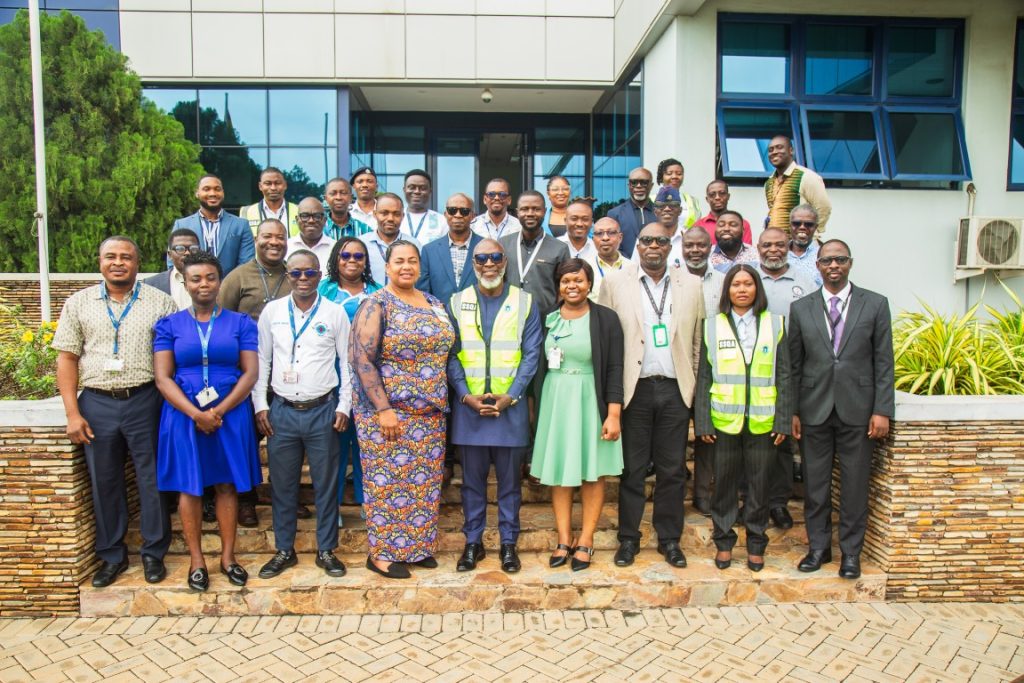
GCAA Holds 2026 Emergency Response Table-Top Exercise
The Ghana Civil Aviation Authority (GCAA) on Thursday, 30 July 2026, organised a Table-Top Emergency Response Exercise at the Ghana Civil Aviation Training Academy (GATA) to strengthen its preparedness and response to aviation emergencies.
The exercise, dubbed “Bravo Bravo 2026”, was moderated by Mr Kwamena Agyei Halm, an Approach Controller and Safety Officer in the Air Traffic Services (ATS) Department. It was facilitated by Ing. Mary Tagoe, Senior Electronics Engineer, and Mr Derek Lartey, Safety Standards and Quality Assurance (SSQA) Manager.
In his welcome address, Mr Lartey described Bravo Bravo 2026 as an important exercise, stressing that many of the emergency scenarios simulated by the GCAA could occur in real-life operations. He noted that incidents involving critical air traffic services infrastructure are a reality in aviation and, therefore, all simulation exercises should be treated with the seriousness they deserve.
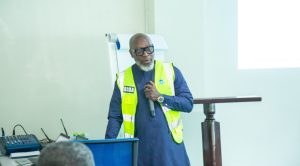
He emphasised that preparedness remains essential to protecting lives and property when emergencies arise.
“Today’s exercise scenario can easily become tomorrow’s operational challenge,” he said.
Mr Lartey added that the exercise would also help identify operational gaps in coordination among the various departments and partner agencies, thereby improving collaboration during actual emergencies.
In a separate address, the Deputy Director of Air Traffic Services, Mr Nartey, said the exercise reflected the GCAA’s and its partner agencies’ shared commitment to aviation safety, operational resilience and continuous improvement.
He explained that as air traffic continues to grow, it is increasingly important for the GCAA and its partners to remain prepared to respond effectively to emergency situations in order to maintain the highest standards of aviation safety and security.
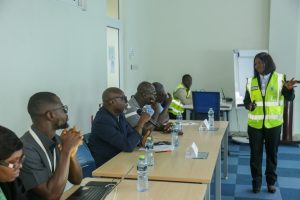
Mr Nartey noted that such preparedness is essential not only to sustain confidence in the GCAA’s systems but also to preserve Ghana’s reputation as a safe, secure and reliable aviation destination.
He observed that aviation emergencies rarely occur under ideal conditions but often emerge from a combination of unexpected events that test the Authority’s resources, procedures, communication systems, coordination and decision-making capabilities.
Against this backdrop, he said Bravo Bravo 2026 was carefully designed to assess the collective readiness of participating agencies through a complex emergency scenario involving a prolonged power outage affecting communication, navigation and surveillance systems, failure of communication systems, disruption to critical infrastructure, and an aircraft emergency after smoke was detected in the cockpit.
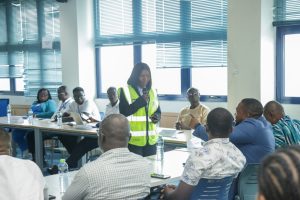
Mr Nartey further highlighted the relevance of the scenario, noting that within the past two months, the Air Traffic Control Tower had successfully managed two aircraft return incidents through effective coordination and response.
The simulation brought together personnel from Aeronautical Information Services (AIS), Air Traffic Control (ATC), Air Traffic Safety Electronics Personnel (ATSEP), Electrical Engineering, the Corporate Communications Section, Aviation Security (AVSEC), Rescue and Fire Fighting Services (RFFS), and the Airport Clinic.
Working through the scenario, participants analysed the unfolding events, applied their respective emergency standard operating procedures and demonstrated how they would coordinate and respond to such an incident under real operational conditions.
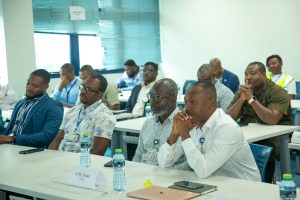
At the end of the exercise, experienced aviation experts assessed the participants’ responses, provided technical observations and recommendations, and identified areas for improvement to further strengthen the GCAA’s emergency preparedness and response capabilities.
GCAA undertakes the table-top exercise annually to hone its preparedness and response to emergencies and incidents in the aviation industry.
You may also like
-
IIA Ghana Pays Courtesy Call on GCAA Director-General to Mark 25th Anniversary
-
GCAA Hosts JARUS Plenary Meeting on Unmanned Systems
-
President Mahama: New ATC Tower, Other AIA Projects Funded by GCAA, GACL Without Government Funding
-
GCAA, AFCAC and CAAS Empower African Aviation Professionals with Crisis Management Skills
-
GCAA Receives Final Sustainable Aviation Fuel Business Implementation Study Report