GCAA Receives Final Sustainable Aviation Fuel Business Implementation Study Report
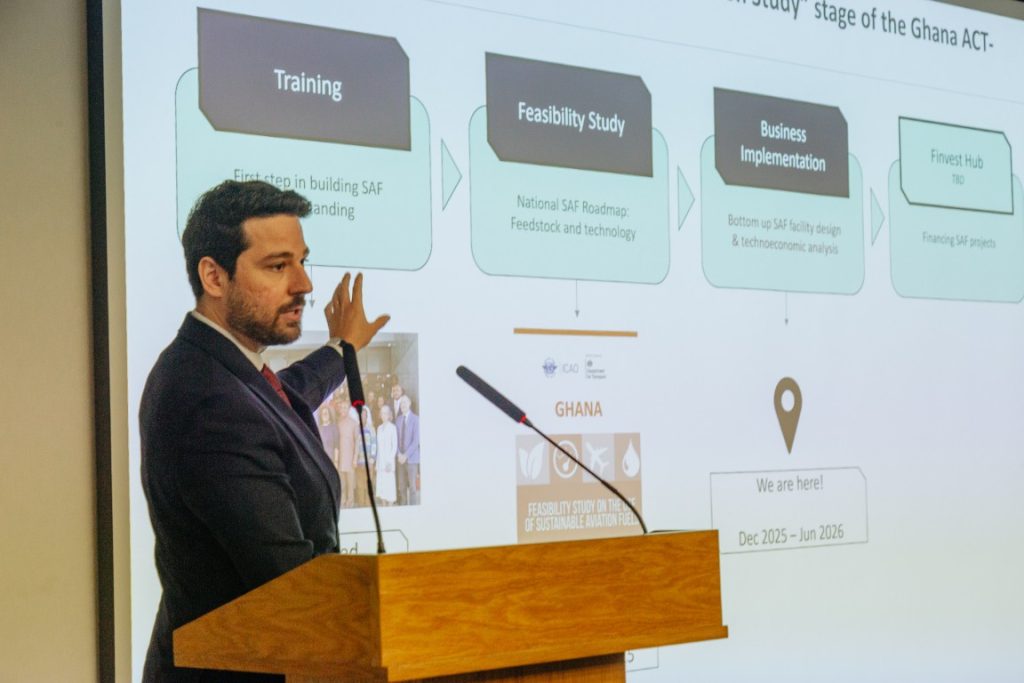
The International Civil Aviation Organization (ICAO), through its ACT-SAF Programme, and consulting firm ICF, with funding support from the UK Department for Transport, on Tuesday, June 9, 2026, presented the final results of the Sustainable Aviation Fuel (SAF) Business Implementation Study for Ghana to the Ghana Civil Aviation Authority (GCAA) at a ceremony held at the Accra International Airport.
Welcoming the team, the Director-General of GCAA, Rev. Stephen Wilfred Arthur, described the event as a significant milestone in Ghana’s journey toward a sustainable aviation future.
“As we gather here today, we are not merely attending the closing of a project; rather, we are witnessing a critical milestone in our nation’s journey towards a more sustainable aviation future,” he said.
Rev. Arthur noted that the study, conducted by ICF under ICAO’s Assistance, Capacity Building and Training for Sustainable Aviation Fuel (ACT-SAF) Programme and funded by the UK Department for Transport, represented a comprehensive effort to move beyond feasibility assessments to practical and implementable solutions.
 He recalled that the initiative began with an in-person stakeholder workshop held in February 2026 and said the final report builds on the foundation established during those engagements.
According to him, the report assesses the viability of various sustainable aviation fuel production pathways tailored to Ghana’s circumstances and develops a robust business case for SAF production in the country.
“For GCAA, this is not just an environmental exercise or a box-ticking activity to demonstrate compliance. It is about enhancing energy security, promoting economic diversification, and ensuring that Ghana remains a competitive and responsible leader in African aviation,” he stated.
Rev. Arthur expressed gratitude to ICF for its diligent work, ICAO for its continuous capacity-building efforts, and the UK Government for its vision and financial support throughout the project.
He also urged local stakeholders, including feedstock suppliers, potential investors, and policymakers, to actively engage with the report’s findings to facilitate informed discussions and coordinated next steps.
“We are very grateful to ICF for taking the opportunity to present this report in person. We look forward to a productive and actionable dialogue,” he added.
Highlights of the final report
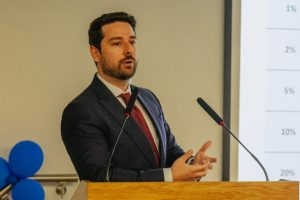 Presenting the report, Mr. Yasar Yetiskin, Sustainable Aviation Senior Manager at ICF, emphasised the importance of stakeholder feedback in refining the study’s recommendations.
“Although the results are coming from our side, we want to receive your feedback. The purpose is to share our understanding and hear your perspectives,” he said.
Mr. Yetiskin explained that the ACT-SAF Programme is a global initiative designed to support countries in scaling up sustainable aviation fuel production through technical assistance, capacity building, and training.
He noted that the Business Implementation Study built upon an earlier feasibility study, focusing on the most viable SAF production options for Ghana.
“The feasibility study findings served as the foundation for this Business Implementation Study. Following stakeholder engagements held in February 2026 and the valuable input received, we have now finalised the study and are here to share the results,” he said.
In his presentation, Mr. Yetiskin highlighted that collaboration across the entire SAF value chain would be essential to establishing a sustainable aviation fuel industry in Ghana and reducing aviation-related emissions.
He revealed that Ghana’s jet fuel consumption is projected to grow at a compound annual growth rate (CAGR) of 2.7 per cent through 2055, with annual aviation emissions expected to reach 1.9 million tonnes of carbon dioxide equivalent (CO2e).

According to the report, domestic demand for SAF in Ghana is likely to be driven largely by voluntary commitments, market price signals, and supportive policy incentives.
The study evaluated various feedstock options and matched them with suitable technologies to create a long list of 13 potential SAF production pathways. The technologies assessed included Alcohol-to-Jet (ATJ), Co-processing, and Hydroprocessed Esters and Fatty Acids (HEFA).
Among the most viable feedstocks identified were cassava tubers and residues, cocoa pod residues, fish oil from livestock and fisheries waste, maize residues, palm oil residues, and rice residues.
The findings indicate significant potential for Ghana to produce meaningful volumes of sustainable aviation fuel through several feedstock and technology combinations.

The report shortlisted pathways with the highest SAF production potential while avoiding duplication of feedstocks across competing pathways.
It also identified Tema as the most suitable location for an Alcohol-to-Jet fuel production facility due to its existing industrial infrastructure and established industrial base.
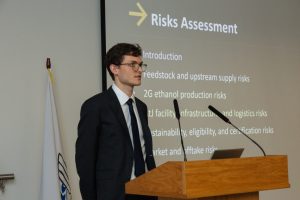
However, the study highlighted 36 highly likely risks that could significantly impact the development of a SAF industry in Ghana. Key challenges include the difficulty and cost of feedstock aggregation, challenges in securing financing for second-generation ethanol producers, potential delays during plant commissioning and early operational phases, and difficulties in ensuring traceability across smallholder and aggregator supply chains.
Despite these challenges, the report concludes that Ghana possesses considerable potential to develop a sustainable aviation fuel industry capable of supporting aviation decarbonisation efforts while contributing to broader economic development goals.

You may also like
-
IIA Ghana Pays Courtesy Call on GCAA Director-General to Mark 25th Anniversary
-
GCAA Hosts JARUS Plenary Meeting on Unmanned Systems
-
President Mahama: New ATC Tower, Other AIA Projects Funded by GCAA, GACL Without Government Funding
-
GCAA Holds 2026 Emergency Response Table-Top Exercise
-
GCAA, AFCAC and CAAS Empower African Aviation Professionals with Crisis Management Skills